
In this guide
- Why your heart and your erections are the same story
- What the research found: the 160-minute rule
- The obese men trial that surprised doctors
- What counts as moderate and vigorous
- Strength training: does lifting help?
- Pelvic floor work
- Cycling: myth or real risk?
- The dark side of the gym: steroids
- A simple weekly plan
- When exercise is not enough
- My take
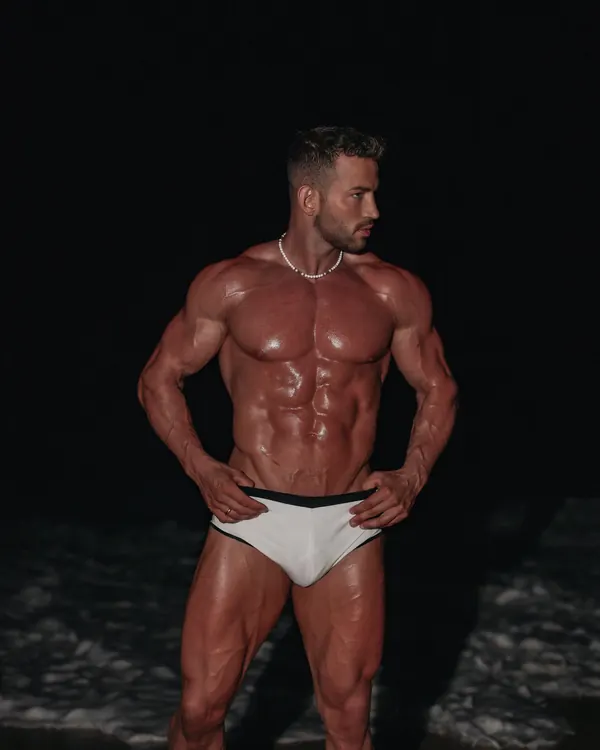
People see my body and assume it is all for the camera. It is not. I have trained most of my adult life, long before the industry, and I keep training because I know what happens to men who stop moving. Their energy drops, their mood drops, and quite often, their erections follow.
I am not a doctor and this is not medical advice. Check with a GP before starting exercise if you have not been active for a while or have heart problems. The facts here come from the NHS and peer-reviewed research. The opinions are mine.
Why your heart and your erections are the same story
An erection is a blood flow event. When you are aroused, nerves signal the arteries in the penis to relax, blood rushes in, and the tissue fills and hardens. If those arteries are stiff, narrowed or not relaxing properly, the erection is weaker.
That is why erectile dysfunction is so often linked with heart disease, high blood pressure, diabetes and obesity. The NHS lists these among the physical causes of erection problems (NHS: erectile dysfunction). The arteries in the penis are small, so they can show problems early. Some doctors call a man’s erection a “dipstick” for his cardiovascular health.
The good news is that the same things that protect your heart protect your erections. And exercise is one of the strongest.
What the research found: the 160-minute rule
In 2018, Danish and Swedish researchers published a systematic review in the journal Sexual Medicine asking a very specific question: how much physical activity do you actually need to improve erectile dysfunction?
They looked at intervention studies from 2006 to 2016 in men with ED linked to physical inactivity, obesity, high blood pressure, metabolic syndrome or cardiovascular disease. Ten studies met their criteria. Their conclusion was clear: about 40 minutes of moderate to vigorous aerobic exercise, four times a week, a total of roughly 160 minutes a week for six months, contributed to decreasing erectile problems in these men (Gerbild et al., PubMed).
That is the closest thing we have to a prescription. Not a magic pill. Four sessions a week, for half a year.
Your penis does not care about your biceps. It cares about your arteries.
The obese men trial that surprised doctors
One of the most quoted studies on this topic was a randomised trial published in JAMA in 2004. Italian researchers took 110 obese men aged 35 to 55 with erectile dysfunction, but without diabetes, high blood pressure or high cholesterol. Half got detailed coaching to lose at least 10% of their body weight by eating less and moving more. The other half got general health advice.
After two years, the intervention group had increased their physical activity from an average of 48 to 195 minutes a week and lost significant weight. Their erectile function scores improved, while the control group stayed the same. 17 of the 55 men in the intervention group, nearly a third, reached a normal erectile function score, compared with 3 in the control group (Esposito et al., JAMA, PubMed).
Think about that. One in three men improved their erections to normal levels without a single pill, just by changing how they lived.
What counts as moderate and vigorous
The NHS guidelines for adults aged 19 to 64 recommend at least 150 minutes of moderate activity or 75 minutes of vigorous activity a week, plus strengthening activities on at least two days (NHS physical activity guidelines).
The NHS gives a simple test:
- Moderate: your heart rate rises, you breathe faster and feel warmer. You can still talk, but you cannot sing. Brisk walking, easy cycling, doubles tennis.
- Vigorous: you breathe hard and fast and cannot say more than a few words without pausing. Running, fast cycling, swimming hard, football.
So the 160 minutes from the erection review is only slightly above the general health guideline. If you hit the NHS target consistently with real effort, you are close.
Strength training: does lifting help?
Most of the erectile function research focuses on aerobic exercise, so that is where the strongest evidence is. But I would never tell a man to skip the weights.
Strength training builds muscle, improves how your body handles blood sugar, helps with body fat and makes you feel strong, which matters for confidence. The NHS recommends it at least twice a week. My advice: lift, but do not let lifting replace the cardio. A man who only does bench press and never gets his heart rate up is missing the part that matters most for erections.

Pelvic floor work
The muscles of the pelvic floor help keep blood in the penis during an erection. There is evidence that pelvic floor muscle training can help some men with erection problems and with control over ejaculation. I explained how to do them properly in Kegel exercises for men. They take a few minutes a day and nobody needs to know you are doing them.
Cycling: myth or real risk?
Men often ask me whether cycling ruins erections. The concern is real: sitting for long periods on a narrow saddle puts pressure on the perineum, the area between the scrotum and anus, where nerves and arteries to the penis run. Numbness after a long ride is a warning sign.
But the research is mixed, and cycling is excellent cardio. The practical answer is not to give up the bike but to set it up well: a saddle that fits, the right height and angle, padded shorts, and standing up regularly on long rides. If you get numbness or tingling, adjust your setup, and see a doctor if it does not go away.
The dark side of the gym: steroids
This part matters to me because I have seen it up close in gyms all over the world. Anabolic steroids and unprescribed testosterone can make you look incredible for a while. They can also shut down your body’s own testosterone production, shrink your testicles and leave you with low libido and erection problems when you stop. The NHS warns about these effects on its anabolic steroids page (NHS: anabolic steroid misuse).
Do not chase a body that destroys the very thing you want to impress with. If you think your testosterone is low, get a proper test. I wrote about that in testosterone and sex drive.
A simple weekly plan
Here is a sensible starting point for a healthy adult. Adjust it to your level and check with a doctor first if you have health conditions:
- Monday: 40 minutes brisk walk, jog or cycle.
- Tuesday: 30 to 45 minutes strength training, full body.
- Wednesday: 40 minutes cardio, a bit harder.
- Thursday: rest or easy walk, plus Kegels.
- Friday: 40 minutes cardio.
- Saturday: strength training, or a sport you enjoy.
- Sunday: 40 minutes of something fun outside: swim, hike, football.
That is four cardio sessions of 40 minutes, matching the research, plus two strength sessions. Combine it with better food, as I explained in diet for erectile health, and quitting cigarettes, as in smoking, vaping and erections.
When exercise is not enough
Exercise is powerful, but it is not everything. Erection problems can come from diabetes, nerve damage, medicines, hormones, anxiety or relationship stress. And because ED can be an early sign of heart disease, it is worth seeing a GP rather than just training harder. If you are young and struggling, read erectile dysfunction in young men.
See a doctor if erection problems last more than a few weeks, and seek urgent help if you have chest pain, shortness of breath or dizziness during exercise.
My take
Men spend fortunes on pills, powders and gadgets, and skip the cheapest treatment available: getting their heart rate up four times a week. I am not saying pills are bad. They help a lot of men. But the research is clear that for many men with ED linked to lifestyle, six months of consistent exercise can make a real difference.
My body is my work, but this advice is not about looking like me. It is about arteries. Walk fast, run, swim, cycle, lift. Do it for your heart, and your erections will thank you.
For the human stories of the women in this industry, read my columns on House of Maximo. Follow my work at maximogarciaworld.com, and for the 18+ side, fuckingpornstars.net.
Sources
- Gerbild H, Larsen CM, Graugaard C, Areskoug Josefsson K. Physical Activity to Improve Erectile Function: A Systematic Review of Intervention Studies. Sexual Medicine, 2018.
- Esposito K et al. Effect of lifestyle changes on erectile dysfunction in obese men: a randomized controlled trial. JAMA, 2004.
- NHS. Physical activity guidelines for adults aged 19 to 64.
- NHS. Erectile dysfunction (impotence).
- NHS. Anabolic steroid misuse.